Architecture & Technology

How PetVet247 actually works

A plain-English technical explainer for the curious — no marketing, just the real architecture.

Start here

What does any of this actually mean for your pet?

Here is the simplest version of what PetVet247 does — before we get into the technical detail.

Imagine you are worried about your dog's gums. They look pale. You are not sure if it is serious. You open PetVet247, answer a few questions, and take a photo of the gums. Here is what happens in the next few seconds — invisibly — before any result appears on your screen.

1

Your symptoms are matched against real veterinary research

Your answers are converted into a fingerprint — a string of numbers that captures the meaning of what you described. That fingerprint is compared against a library of peer-reviewed veterinary research articles that have been read and stored in the same mathematical format. The most relevant research rises to the top — not because it mentioned the same words, but because it described the same clinical picture.

2

Your photo is compared directly against real cases

Your gum photo is converted into its own fingerprint — this time capturing colour, tone and texture visually. That fingerprint is compared against photos that other owners have shared from their pets' real health journeys. A photo of pale gums finds other pale gum photos — even if the owners described them completely differently in words.

Real example

A photo of a dog's gums taken during a routine triage matched a community photo from Max's story — a Jack Russell later diagnosed with oral cancer — with 90.25% visual similarity. No keywords. No breed filter. Two photos that looked alike, found by AI.

3

An AI reads everything and gives you a straight answer

The relevant research, your photo, your symptom answers, and the matched cases are all passed to the AI together. It reads the actual photo — not a description of it — alongside the clinical evidence, and gives you a clear green, amber, or red result with a plain-English explanation.

The result is not a guess. It is a conclusion drawn from your specific pet's symptoms, your specific photo, and the most relevant veterinary evidence available. That is what makes PetVet247 different from asking a general AI chatbot — or googling at midnight.

The triage pipeline

When a pet owner submits a triage, four things happen in sequence. Here is exactly what runs, and in what order.

1

Structured questions

The owner answers guided questions about their pet's symptoms — eating, drinking, energy, breathing, gum colour, movement, and specific signs. Answers are compiled into a structured symptom summary before any AI is involved.

2

RAG knowledge retrieval

The symptom summary is converted into a 1,024-dimensional vector using Amazon Titan Text Embeddings v2. This vector is compared against PetVet247's curated knowledge base of peer-reviewed veterinary research — open-access, CC-BY licensed — stored in PostgreSQL with the pgvector extension. The six most semantically relevant research chunks are retrieved and will be passed to the AI in the next step.

Amazon Titan Text Embeddings v2 · pgvector · cosine similarity
3

AI assessment

The symptom summary, retrieved research chunks, and any uploaded photos are passed to Claude Sonnet (Anthropic) running on AWS Bedrock. Claude produces a plain-English assessment with an urgency score and outcome classification — green, amber, or red. Every assessment is grounded in the retrieved research, not just general AI training data.

Claude Sonnet · AWS Bedrock · multimodal
4

Photo embedding (runs in parallel)

If the owner uploaded a photo, it is simultaneously converted into a 1,024-dimensional image vector using Amazon Titan Multimodal Embeddings. This vector is stored separately and used for community story matching later. It does not influence the AI assessment — Claude receives the raw image directly and performs its own visual analysis.

Amazon Titan Multimodal Embeddings · S3 (eu-west-2)

The community matching pipeline

When a triage completes, PetVet247 searches its library of approved community stories to find the most relevant ones to show the owner. This uses two parallel similarity searches.

📝

Text matching

The triage symptom text is embedded with Titan Text Embeddings v2 and compared against the combined story text of every approved community case using cosine similarity in pgvector.

🔬

Image matching

When photos are present, the triage photo embedding is compared directly against every approved community case photo embedding using cosine similarity. This is true image-to-image comparison — no AI description of the image is used as an intermediary.

Blended ranking

The two similarity scores are combined — 60% text, 40% image by default — and stories are ranked by the blended score. Stories rise to the top because they are genuinely similar in both what owners described and what their photos showed.

Human moderation gate. Community photos only enter the image matching pool after a human moderator has reviewed them for clinical accuracy, safety, and owner privacy. Unmoderated photos are never used in matching.

The knowledge base

PetVet247's RAG knowledge base contains peer-reviewed veterinary research articles sourced from open-access journals under Creative Commons licences (CC-BY). Each article is processed as follows:

Additional peer-reviewed sources are cited for reference only and do not influence AI responses. PetVet247 does not use proprietary vet data, user data, or commercially licensed content without explicit permission.

The stack

Everything that runs behind a triage.

Category Technology
AI assessment Claude Sonnet (Anthropic) via AWS Bedrock
Text embeddings Amazon Titan Text Embeddings v2 — 1,024 dimensions
Image embeddings Amazon Titan Multimodal Embeddings — 1,024 dimensions
Vector search pgvector on Amazon RDS PostgreSQL
Knowledge base Peer-reviewed veterinary research — CC-BY open access
Infrastructure AWS EC2 + RDS + S3 — EU West / London (eu-west-2) for data storage · AWS US East (us-east-1) for AI inference via Bedrock
Mobile app React Native — iOS and Android
Background tasks Celery + Redis
Clinical review Sophie Ellis, Student Veterinary Nurse (clinical training)

What we don't do

Transparency means saying what something is not, as clearly as what it is.

Built on 30 years of enterprise security

PetVet247 is not a side project. It was built by Neil Ellis — a technology executive and practising Chief Information Security Officer with over 30 years of experience securing enterprise systems at scale.
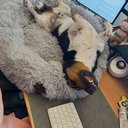
Max, Neil's dog and the inspiration for PetVet247

Max — the reason
PetVet247 exists

The builder's background

  • CIO and CISO at CafeX Communications — a real-time communications platform used by global financial institutions and government agencies
  • Senior roles at Avaya, one of the world's largest enterprise communications companies
  • Technology leadership at Ubiquity, the University of Wales, and the Office for National Statistics

This is not a background in building toy apps. It is a background in building systems where security failures have real consequences — financial, regulatory, and human.

GDPR by design

Account deletion, data retention, and consent flows were built to UK GDPR requirements from day one — not retrofitted. Pet data and triage photos are never used for AI training or shared without explicit consent.

Zero advertising architecture

PetVet247 has no advertising revenue model and no commercial relationships with vet practices or insurers. There is no financial incentive to influence clinical guidance. This is a structural choice, not a policy promise.

AI governance

Every AI assessment is grounded in cited veterinary research and logged with a full audit trail. The system is designed with AI governance principles consistent with ISO 42001 — the international standard for AI management systems.

Secure infrastructure

Pet data is stored within AWS EU West — London (eu-west-2), the same region used by NHS digital services and UK government departments. AI inference runs on AWS US East (us-east-1) via Amazon Bedrock — a standard and legally compliant arrangement under AWS's data processing terms.


PetVet247 is registered in England and Wales (PV247 AI Ltd). Neil's professional background is documented on LinkedIn. We welcome scrutiny — from vets, regulators, and technically curious pet owners alike.

Explore PetVet247

Home Pricing Contact Privacy Policy Terms

Seen enough? Try it with your pet.

Start a free triage →